Industry
Why more podcasts are going video-first.
What is driving the move to video, and what a show needs to make the switch.
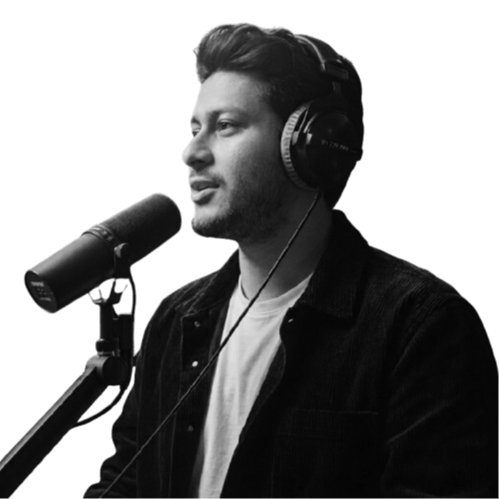
There is a difference between a podcast that has a camera in the room and a podcast made to be watched. The first is an audio show with evidence. The second is a video-first podcast, and it is quickly becoming the default way new shows are built.
A video-first podcast is planned, recorded and edited for the viewer, and the audio version is made from the same recording. This article covers why so many shows are switching, what you need to start, and what changes once the footage reaches the edit.
What "video-first" really means
In an audio-first show, video is a leftover. Someone props up a phone and it captures whatever happens. In a video-first show, choices are made for the eye: where people sit, how they are lit, when the edit cuts to a raised eyebrow, what appears on screen while a guest tells a story.
Listeners lose nothing. The audio feed carries the same conversation. But the version people share is the one they can see.
Reason one: video is where strangers find you
Audio apps are loyal. They bring each new episode to the people who already follow you, and they are not built to do much more. Video platforms recommend, search and suggest. They make introductions.
The numbers back it up. YouTube reports more than 1 billion monthly viewers of podcast content. Edison Research found in 2026 that 57% of Americans aged 12 and over have both listened to and watched a podcast, the first time that group has been a majority. The full picture is in the state of video podcasting.
Reason two: you cannot clip a voice
Short clips are how many shows reach new people on Instagram, TikTok, LinkedIn and YouTube Shorts. A clip needs a face, a reaction and captions. Record audio only and you are left with a waveform wobbling over a logo, which is very easy to scroll past.
One video episode can produce several clips, and each one works like a small trailer for the full conversation. Our guide to cutting podcast clips people finish covers how to choose and edit them.
Reason three: people trust a face faster
For agencies, coaches, consultants and founders, a podcast is often the first real meeting with a future client. Watching someone think, hesitate and laugh builds trust in a way a voice alone takes much longer to do. It is the difference between a phone call and sitting across the table.
Audio keeps the audience you have. Video is how the next audience finds you.
What you need to start a video podcast
Less than the gear reviews suggest. Get these in order and you are most of the way there.
- Sound first. Viewers forgive an average picture. They leave over bad audio. A good microphone for each speaker beats any camera upgrade.
- One camera per person if you can manage it. It lets the edit cut to reactions, and reactions are half the reason to watch.
- Light on the faces. A window or one soft light in front of each speaker is enough to begin.
- The same set every week. A consistent look makes your show recognisable in a crowded feed.
- A plan for the edit. Decide who does it before you record ten episodes.
Recording a video podcast remotely
You do not need everyone in one studio. Plenty of video podcasts are recorded with each person filming at home. Ask every guest for three things: a quiet room, a light in front of them and a camera at eye level. Where your recording tool allows it, record each person locally, so the picture does not depend on anyone's internet connection.
What changes in the edit
An audio edit tidies. A video edit directs. It decides where the viewer looks at every second, and that covers more ground than most people expect.
- Cutting between cameras, including to the listener when the reaction says more than the words.
- Removing pauses and stumbles without leaving a visible jump.
- Adding b-roll or graphics when a story needs a picture.
- Grading the color so every camera matches.
- Cleaning the audio to one consistent level.
- Writing captions that can be read at a glance.
It is more work per episode than audio, and this is usually the moment a creator or agency decides whether to edit in-house or bring in a partner. We compare the two honestly in in-house editor or editing partner.
Mistakes to skip
Buying the camera before the microphone. Sound problems lose viewers faster than picture problems.
Publishing the raw recording. One wide shot for an hour is hard to sit through. Even simple cuts between two angles help.
Wasting the first 30 seconds. Video platforms show your episode to strangers. Open with a strong moment, not a long hello.
Skipping captions. Many people start a video with the sound off. Captions keep them there until they turn it on.
Frequently asked questions
Is a video podcast better than an audio podcast?
It reaches more people. Most of the US audience now both listens to and watches podcasts, and video platforms are better at recommending shows to new viewers. Audio still matters for existing listeners, so most shows publish both.
Can I turn my audio podcast into a video podcast?
Yes, starting with your next recording. Add a camera for each speaker, keep the audio quality you already have, and publish the video on YouTube and Spotify alongside your audio feed.
How much harder is it to edit a video podcast?
Noticeably. Multi-camera footage, color and captions take longer than an audio edit. Plan the time, or the editing partner, before you commit to a schedule.